


Charging Voltage/Current Settings for Various Batteries
Charging current:
Default 0.2C, where C is the battery capacity.
0.1~1C are all reasonable: 0.1C is slow charging, above 0.5C is fast charging (lead-acid must not exceed 0.3C)
Charging voltage:
01Li-ion charging voltage = N*4.20V;
02LiFePO4 charging voltage = N*3.6V;
Lead-acid charging voltage = N*2.28V;
NiMH/NiCd charging voltage = N*1.6V;
where N is the number of cells in series, convertible from the battery rated voltage;
For Li-ion, N = battery nominal voltage / cell voltage Sv;
Li-ion Sv=3.6, LiFePO4 Sv=3.2, lead-acid Sv=2.0, NiMH/NiCd Sv=1.2.
2Implementation of the Circuit Design
2.1Two/three-stage CC-CV charging circuit for small-capacity lithium and lead-acid batteries
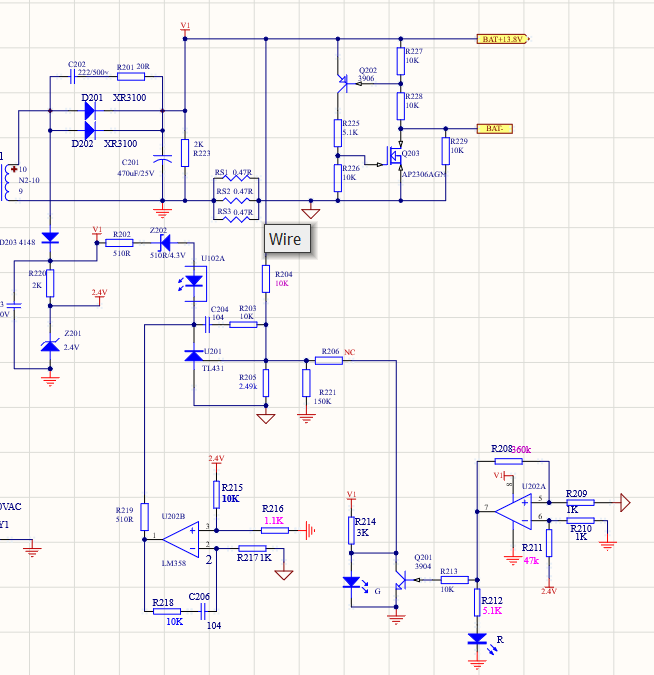
Figure 1: CC+CV charging control circuit; key components: LM358, AP2306, TL431A
2.2Intelligent charging circuits suited to lithium, lead-acid, NiMH, NiCd and other batteries with different charging curves are generally implemented with the following MCU scheme,
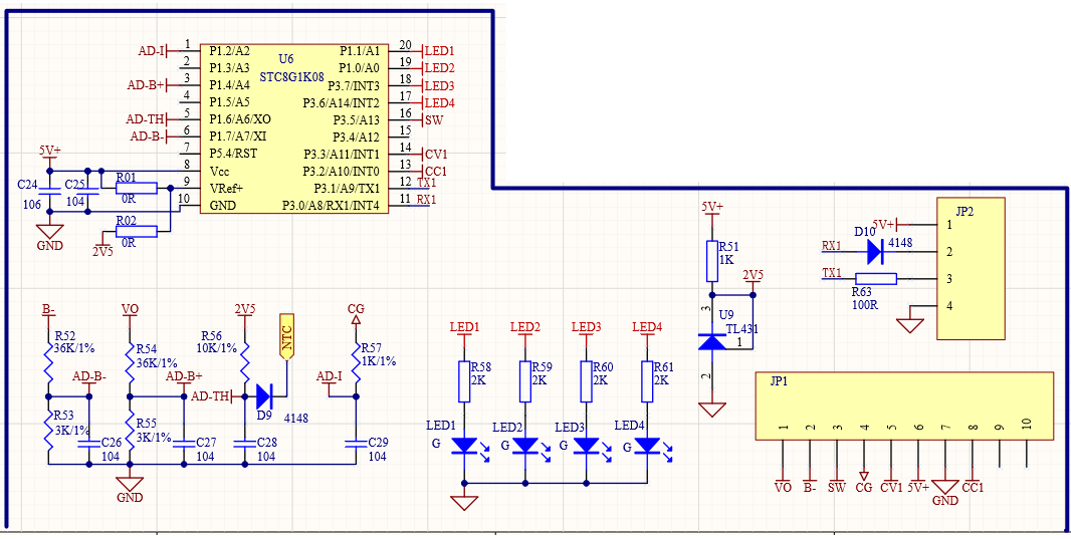
Figure 2: general MCU charging control schematic with temperature compensation, temperature protection, battery-level display, etc. Key component: STC8G1K08
2.3For multi-function chargers with higher requirements — temperature compensation, temperature protection, host communication, LCD display and other HMI needs — the following fully-featured MCU scheme is recommended
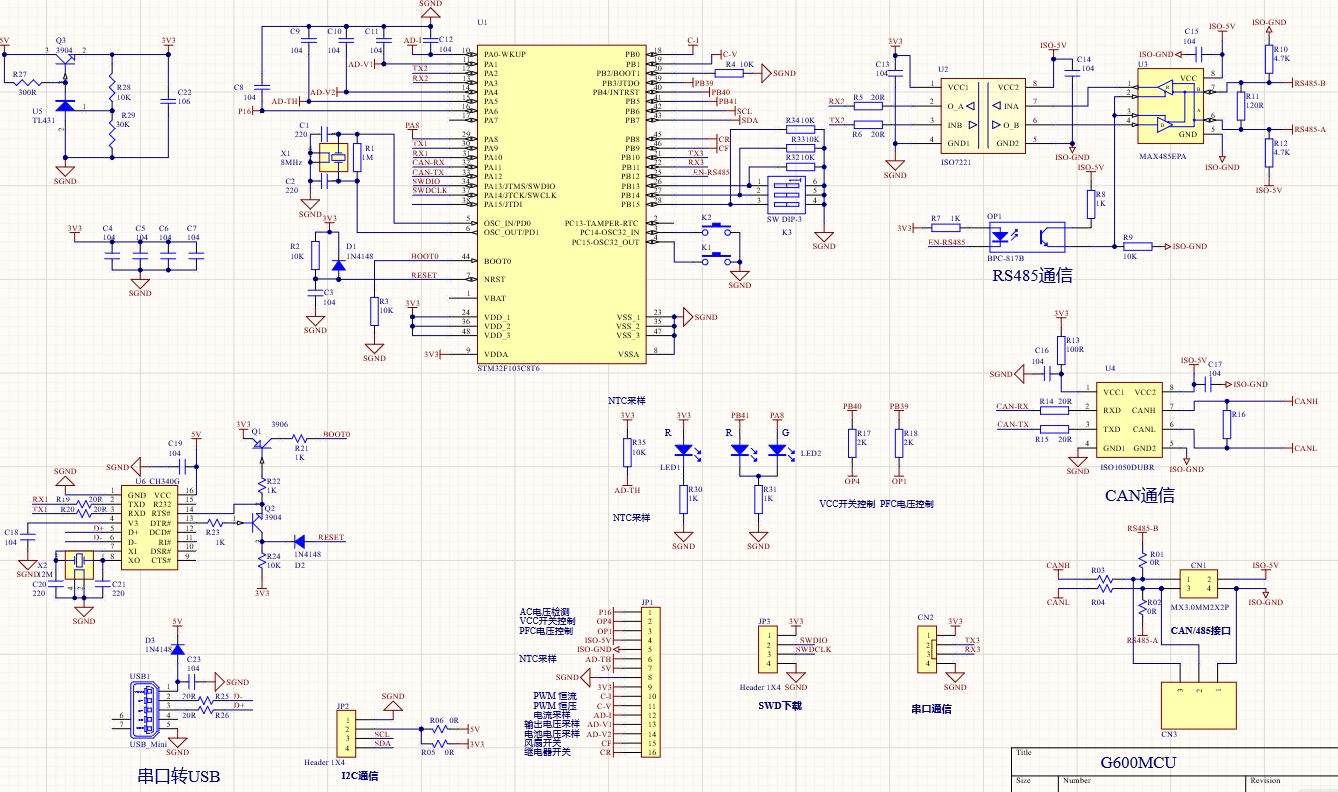
- Figure 3
- fully-featured MCU charging control circuit with temperature compensation, temperature protection, LCD display, communication control, etc.
- Key ICs
- MCU GD32F103C8T6, CAN communication NSI1050-DDBR, isolated RS-485 MAX485ED,
serial communication CH340G, LCD QT130A